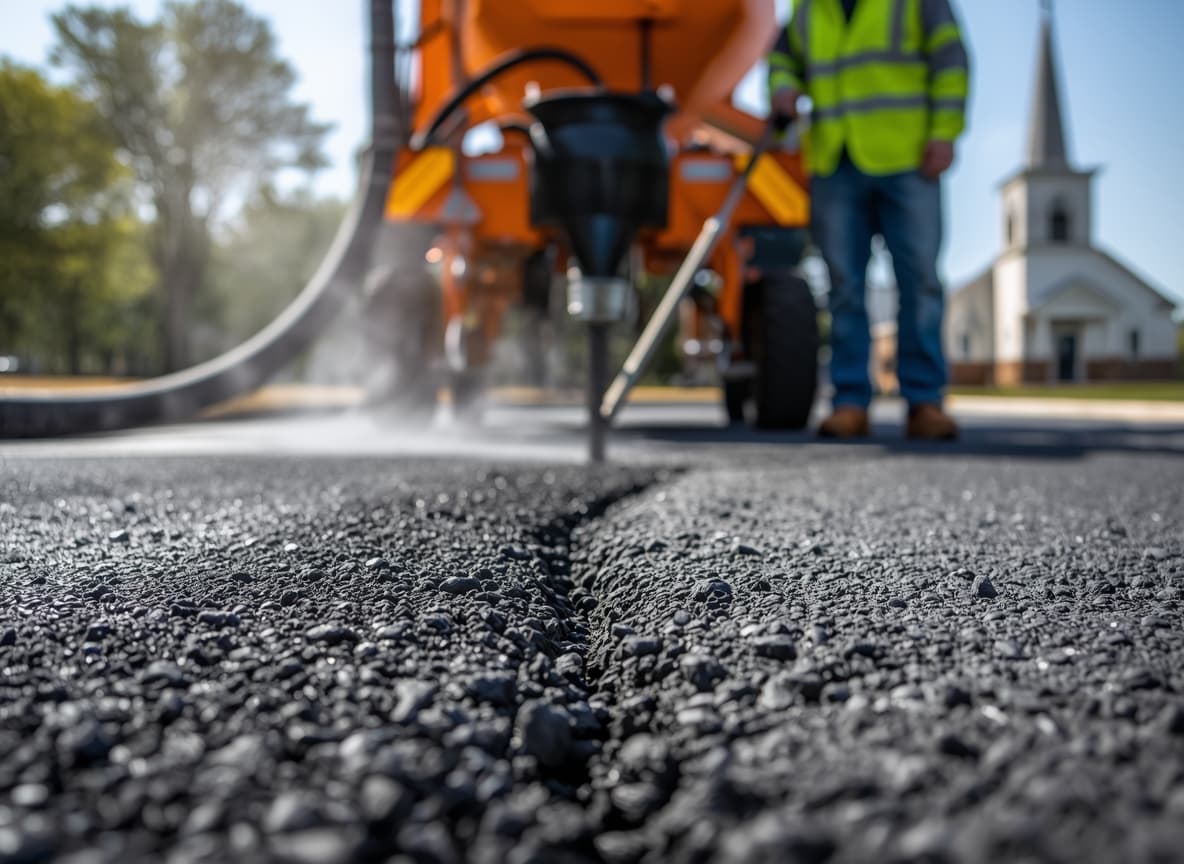
Hot Rubber Crack Filling in Ontario
Stop water infiltration and prevent freeze-thaw damage before small cracks become expensive potholes. Professional hot-pour rubberized crack repair that lasts.
Get Your Free AssessmentWhy Small Cracks Become Big Problems in Ontario
A ¼-inch crack doesn't look like much. But in Ontario's climate, that tiny crack is a countdown timer to expensive damage.
Here's what happens: Water seeps into the crack during rain or snowmelt. When temperatures drop below freezing—which happens constantly throughout Ontario winters—that water expands by about 9% as it turns to ice. This expansion pushes the crack wider. When temperatures rise above freezing, the ice melts and more water flows deeper into the crack. The cycle repeats dozens of times each winter.
This freeze-thaw cycle is relentless. A ¼-inch crack this fall can become a ½-inch crack by spring. By next fall, it's an inch wide. Within 2-3 years, you have a pothole. The asphalt base is compromised, water is pooling underneath, and you're looking at a $2,000-$5,000 repair instead of a $200-$400 crack fill.
Professional crack filling stops this cycle. It's the single most cost-effective maintenance you can do for Ontario asphalt.
Don't Wait Until Spring
Most property managers think "I'll deal with cracks in spring." By then, the damage is done. Ontario winters destroy cracked asphalt. The best time to fill cracks is fall (before freeze-thaw starts) or late spring (right after winter damage appears).
Why We Use Hot-Pour Rubberized Crack Filler
Not all crack filling is created equal
Hot-Pour Rubberized (What We Use)
- Flexible: Expands and contracts with temperature changes without cracking
- Durable: Lasts 3-5 years in Ontario conditions when applied correctly
- Bonds Properly: Applied at 375°F, it melts into crack walls for superior adhesion
- Waterproof: Creates a true water barrier that stops freeze-thaw damage
Cold-Pour (Cheaper Alternative)
- Brittle: Cracks and breaks apart during freeze-thaw cycles
- Short-Lived: Often fails within 1-2 years, requiring re-application
- Poor Adhesion: Sits on top of cracks instead of bonding to walls
- Water Penetration: Doesn't seal effectively, allowing continued damage
The Bottom Line: Cold-pour crack filler is cheaper upfront, but you'll pay more in the long run when it fails and you have to redo the work—or worse, repair pothole damage. Hot-pour rubberized filler costs more initially but lasts 3-5x longer and actually protects your investment.
Our Crack Filling Process
Crack Cleaning & Preparation
We use industrial blowers and wire brushes to remove dirt, vegetation, and loose material from every crack. Any debris left in the crack prevents proper adhesion. Clean preparation is critical for long-lasting results.
Hot-Pour Material Heating
Rubberized crack filler is heated to 375°F in our melter/applicator. This temperature is critical—too cool and it won't bond properly; too hot and it degrades. We monitor temperature constantly throughout application.
Precision Application
Hot material is poured directly into cracks, filling them completely from bottom to top. We slightly overfill so material settles flush with the surface. Proper application creates a flexible, waterproof seal that moves with the asphalt.
Surface Treatment & Curing
Freshly filled cracks are treated with fine sand to prevent tracking and improve traction. Material cools and sets within 30-60 minutes. Unlike seal coating, crack filling can be driven on almost immediately after cooling.
Crack Filling Cost & Timing
Typical Ontario Pricing
Crack filling is priced by linear footage (how many feet of cracks you have). Professional hot-pour crack filling typically costs:
- $3-$5 per linear foot for standard ¼-½" cracks
- $5-$8 per linear foot for wider cracks (½-1")
- $200-$500 minimum for small jobs (mobilization costs)
Most Ontario parking lots have 100-300 linear feet of cracks requiring repair, putting typical projects in the $500-$1,500 range.
Cost Comparison: Filling cracks early costs $3-$5/ft. Waiting until they become potholes costs $50-$100 per pothole to repair. The math is simple: fix cracks when they're small.
Best Time for Crack Filling in Ontario
Spring (April-May)
Assess winter damage and fill new cracks before summer heat expands them. Must wait until all frost is out of the ground.
Fall (September-October)
Best time. Fill cracks before winter freeze-thaw cycles begin. Protects your asphalt through the harshest season.
Frequently Asked Questions
Why is crack repair important for parking lots in Ontario?
Crack repair prevents water from entering the asphalt, where freeze-thaw cycles can cause rapid expansion and structural damage.
When is the best time of year for asphalt crack repair?
Crack repair is most effective from late spring through early fall, when temperatures allow repair materials to properly bond.
Does crack repair extend the life of seal coating?
Yes. Sealing cracks before seal coating helps prevent premature failure and significantly improves the effectiveness of the seal coat.
Are small cracks really a concern?
Yes. Even small cracks can allow moisture into the asphalt base, leading to larger cracks, potholes, and more costly repairs if left untreated.
Additional Technical Questions
Crack Filling Services Across Ontario
Professional hot-pour crack repair for all Ontario regions
Get Your Free Crack Assessment
Drone inspection identifies every crack—we'll tell you what needs attention now vs. later